Status games
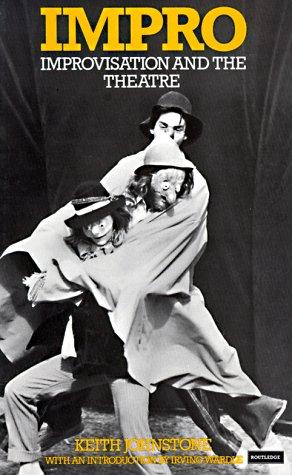
Impro: Improvisation and Theatre — Keith Johnstone
The See-saw principle
In the interaction between two people, one always goes up if another one goes down and vice versa. Exceptions: where you are sitting on his "end of the see-saw".
Walk into a dressing-room and say 'I got the part' and everyone will congratulate you, but will feel lowered. Say 'They said I was too old' and people commiserate, but cheer up perceptibly. Kings and great lords used to surround themselves with dwarfs and cripples so that they could rise by the contrast. Some modern celebrities do the same. If status can't even be got rid of, then what happens between friends? Many people will maintain that we don't play status transactions with our friends, and yet every movement, every inflection of the voice implies a status. My answer is that acquaintances become friends when they agree to play status games together.
People usually don't like to hear when we tell them nice things about ourselves. On a related note, people like to hear things to our discredit, but in a way that they won't need to feel sympathy.
When we tell people nice things about ourselves this is usually a little like kicking them. People really want to be told things to our discredit in such a way that they don't have to feel sympathy. Low-status players save up little tit-bits involving their own discomfiture with which to amuse and placate other people
Teaching status - Eye contact
Social animals have inbuilt rules which prevent them killing each other for food, mates, and so on. Such animals confront each other, and sometimes fight, until a hierarchy is established, after which there is no fighting unless an attempt is being made to change the 'pecking order'. This system is found in animals as diverse as human beings, chicken, and woodlice.
In animals the pattern of eye contacts often established dominance. A stare is often interpreted as an aggressive act – hence the dangers of looking at gorillas through binoculars. Visitors to zoos feel dominant when they can outstare the animals.
In my view, breaking eye contact can be high status so long as you don't immediately glance back for a fraction of a second. If you ignore someone, your status rises, if you feel impelled to look back then it falls.
Teaching status - Other techniques
I might then begin to insert a tentative 'er' at the beginning of each of my sentences, and ask the group if they detect any change in me. They say that I look 'helpless' and 'weak' but they can't, interestingly enough, say what I'm doing that's different.
Speaking with a still head makes you more authoritative, while jerking your head is low status.
Again I change my behavior and become authoritative. I ask them what I've done to create this change in my relation with them, and whatever they guess to be the reason – 'You're holding eye contact', 'You're sitting straighter' – I stop doing, yet the effect continues. Finally I explain that I'm keeping my head still whenever I speak, and that this produces great changes in the way I perceive myself and am perceived by others.
Everyone has their defaults.
My belief (at this moment) is that people have a preferred status; that they like to be low, or high, and that they try to manoeuvre themselves into the preferred positions.
These are just tricks in order to get the students to experience status changes. If I speak with a still head, then I'll do many other high-status things quite automatically. I'll speak in complete sentences, I'll hold eye contact. I'll move more smoothly, and occupy more 'space'.
Teaching status - Space
Space is very difficult to talk about, but easy to demonstrate.
If I stand two students face to face and about a foot apart they're likely to feel a strong desire to change their body position. If they don't move they'll begin to feel love or hate as their 'space' streams into each other. High-status players will allow their space flow into other people. Low-status players will avoid letting their space flow into other people. Kneeling, bowing and prostrating oneself are all ritualized low-status ways of shutting off your space. If we wish to humiliate and degrade a low-status person we attack him while refusing to let him switch his space off. A sergeant-major will stand a recruit to attention and then scream at his face from about an inch away.
Imagine that two strangers are approaching each other along an empty street. It's straight, hundred of yards long and with wide pavements. Both strangers are walking at an even pace, and at some point one of them will have to move aside in order to pass. You can see this decision being made a hundred yards or more before it actually "needs" to be. In my view the two people scan each other for signs of status and then the lower one moves aside. If they think they're equal, both move aside, but the position nearest the wall is actually the strongest. If each person believes himself to be dominant, a very curious thing happens. They approach until they stop face to face, and do a sideways dance, while muttering confused apologies.
Once you understand that every sound and posture implies a status, then you perceive the world quite differently, and the change is probably permanent. In my view, really accomplished actors, directors, and playwrights are people with an intuitive understanding of the status transactions that govern human relationships. This ability to perceive the underlying motives of casual behaviour can also be taught.